Strait of Hormuz
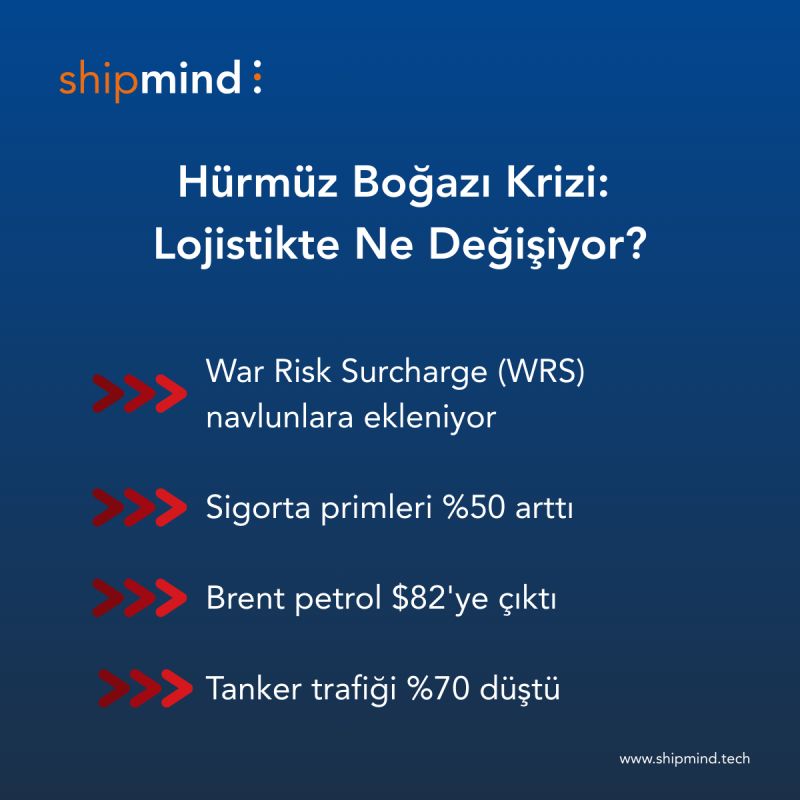
The developments in the Strait of Hormuz in the last few days have deeply affected global maritime trade. After the operations of the USA and Israel against Iran, the Bosphorus traffic came to a virtual standstill. While tanker traffic has decreased by 70% at this critical crossing point, where approximately 20 million barrels of oil flow daily, more than 150 ships are anchored in the region.
Major carriers such as Maersk, MSC, Hapag-Lloyd and CMA CGM have suspended strait crossings. Ships are diverted to the Cape of Good Hope, which adds weeks to transit times. Brent oil rose to $82, war risk insurance premiums increased by up to 50%.
Shipowners also started to reflect the increased risk to freight rates as War Risk Surcharge (WRS). The picture has become even more complicated as the Red Sea route has become uncertain again.
Exporters and importers are directly affected by this crisis. There is a sharp increase in freight costs, a contraction in container capacity and serious uncertainty in delivery times. What makes a difference in such periods is to be able to follow freight changes instantly and to keep ETA management tight.