Blog

Notes on freight, logistics operations and what we are building.

· Murat Ozemre

Request Types

When asking for a quote, there is something we don't usually tell the supplier: what are we asking for this quote for?

In fact, there are two completely different requests, both from the same e-mail: * Informational — budget study, tender preparation, price idea. There is no burden behind it. * For loading purposes — the load is ready, the date is set, the customer is waiting.

The supplier cannot distinguish between these two. When he can't distinguish them, he throws them all in the same box. And that box is usually the "no hurry" box.

The result: your request, which is really urgent today, is being processed at the same pace as your budget work three months ago.

The opposite is also true. If you write "urgent" to every request, none of them are urgent.

There's also the data side: keeping the informational offer and the upload offer in the same place and averaging them distorts what you're measuring. One is a forecast and the other is a commitment.

The solution is not complicated. Rewriting the type of request and the expectation of validity.

Do you separate these two? #lojistik #navlun #dışticaret #tedarikzinciri

Photo by Drew Beamer on Unsplash

Read more →
· Murat Ozemre

Supplier Reach

You send a freight quote request to 8 suppliers.

By the end of day one you have 1, maybe 2 quotes. (10-20%)

On day two 3 more arrive. (30%) After that it trickles. Final response rate: 50-60%.

So 4 or 5 of your 8 suppliers never reply at all.

What that means in practice: you think you're comparing 8 quotes. You're comparing 5. What you call "the market rate" is half the market. The more uncomfortable part is timing. If your customer needs an answer the same day, you have to decide on the 1-2 quotes in hand. Supplier selection stops being a price comparison and becomes a speed lottery. Whoever replied first wins the job.

And then this: fewer than 5% of replies include more than one option. Almost no supplier says "there's also a routing that's four days slower but $300 cheaper." One price, one line, that's it. Which is odd, because offering alternatives serves the supplier too — that's where the lost job gets won back.

Who fills the gap? Your team. Reminder emails, phone calls, WhatsApp. Every quote request generates its own chase-up job.

And to be fair, some of the blame sits with us: a request sent without a clear deadline, in an unstructured email, may not deserve a reply.

I'd like to know how this looks on your side: → How many suppliers reply within one day? → When you set a deadline, how many respect it? → How many do you end up chasing? → Do any of your suppliers quote with alternatives? The numbers vary a lot by destination country, so comparing in the comments would be useful.

Read more →
· Murat Ozemre

Suez Canal

The return has started in Suez, but the routes can change weekly.

After a two-year hiatus, major lines started to use the Suez Canal again. Maersk returned one service to the Red Sea after test voyages in January 2026; Hapag-Lloyd accompanied this decision in February as part of the same alliance. By June, weekly crossings had reached 27-28 ships, a 20% increase from the previous period.

The picture has not completely improved. At the end of July - August 2026, the security risk in the region rose again: drone attack on ships in Damietta, successive tanker attacks and the declaration of a "blockade" by the Houthis, the death of 11 crew members on a ship on August 4, and the expansion of the high-risk zone by London insurers, to name a few. Some carriers turned to the Cape of Good Hope route again after these developments.

So there is actually no clear picture. The return is real but permanent, no one can guarantee yet. And because of this uncertainty, route decisions can no longer change on a monthly basis, but week by week, sometimes day by day — which directly affects time, capacity and price.

In such a period, instead of sticking to a single offer, it really makes a difference to compare all the offers you have (regardless of which route they come from, duration, currency).

Photo by Anastasios Antoniadis on Unsplash #Denizcilik #Lojistik #SüveyşKanalı #KızıldenizKrizi #Navlun #ShipMind

Read more →
· Gokhan Yeneroglu

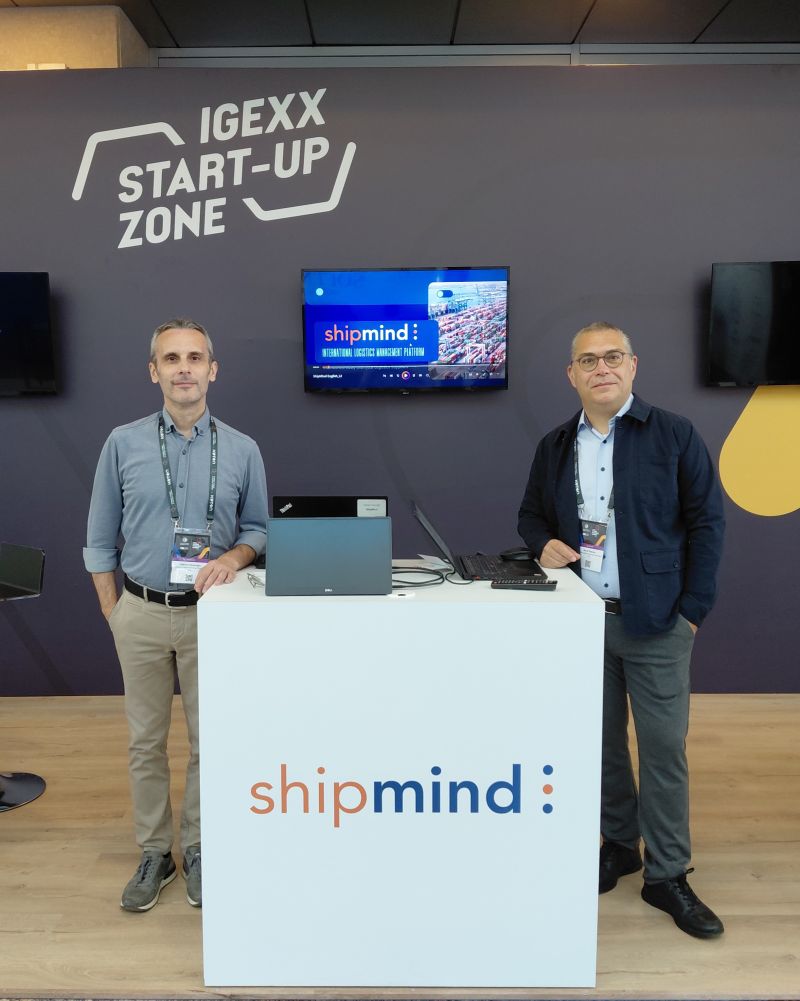
We have taken our place at the IGEXX ISTANBUL GLOBAL E-EXPORT SUMMIT at the Istanbul Lütfi Kırdar/Haliç Congress Center. We look forward to welcoming you to our booth!

#TIM #TIMTEB

· Murat Ozemre

Organizing Communication

Getting a freight quote for a container still takes an average of 6 mail processes, 2 WhatsApp groups and 1 Excel file.

The picture we see on the field is as follows:

The procurement specialist emails five forwarders. Three return the same day, one the next day, and one never return. Reminders are thrown out. Offers come in different formats — one including THC and one except. All are manually entered into an Excel to compare.

When the decision is made, the validity period of the first offer may even have expired.

The invisible cost of this is greater than expected: → Loads scheduled with an overdue rate → Suppliers who were never evaluated because they did not return on time → Errors from manual data entry → And most importantly: price history that does not accumulate anywhere

Because the offer left in the mailbox is not the company's data. It is the person's data. When that person leaves, his three-year bargaining memory goes with him. However, knowing which supplier gave what last quarter on the same route changes where you stand at the table today. The problem is not getting offers. Being able to collect and compare offers in one place and keep that data.

That's exactly what we built ShipMind for: to manage and compare freight quote requests from a single screen and write the history to the company's memory.

Where do you keep your proposal processes — email, Excel, or a system? #lojistik #navlun #dışticaret #tedarikzinciri #ShipMind

Photo by Guillaume Bolduc on Unsplash

Read more →
· Murat Ozemre

Time Tracking

Cut-off time or deadline?

In container shipping, we use these two words like they mean the same thing.

They don't.

A deadline is usually commercial or contractual — a due date agreed between parties.

A cut-off time is operational — the exact moment a container must physically arrive at the terminal, or a document must be submitted, for the shipment to move.

Miss a deadline, and you renegotiate. Miss a cut-off, and the vessel sails without you.

That's the real distinction: a cut-off is tied directly to the flow of cargo through the shipping network. There's no grace period, no follow-up email that fixes it after the fact.

For forwarders and shippers juggling dozens of shipments a week, this isn't academic — it's the line between an on-time delivery and an uncomfortable call to the customer.

How does your team track cut-offs today — spreadsheet, memory, or something smarter?

#FreightForwarding #Logistics #SupplyChain #Shipping

Photo by Agê Barros on Unsplash

Read more →

Logo

Developed by NAUTILICA SOFTWARE SERVICES